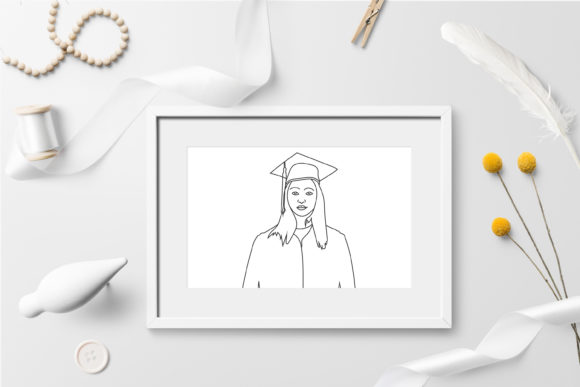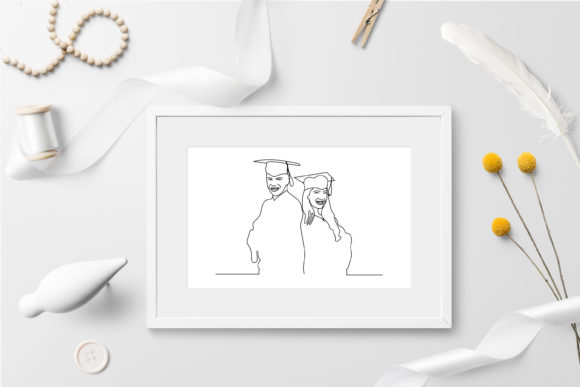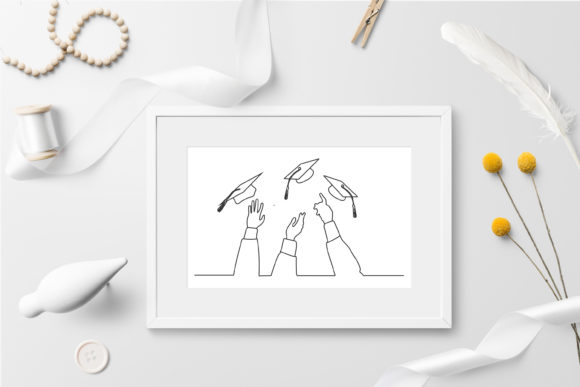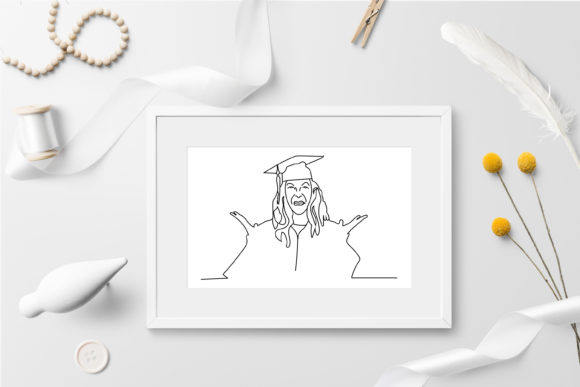
Abstract Line Drawing Graduates Boy
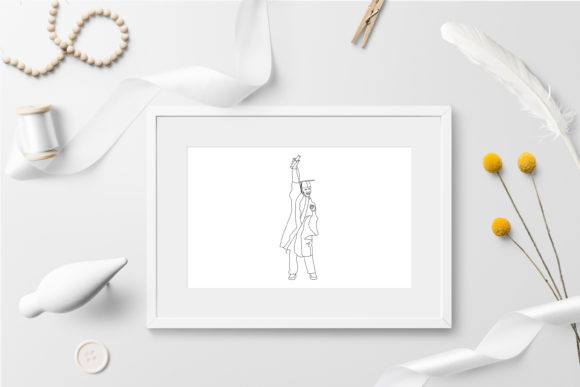
When I first opened Abstract Line Drawing Graduates Boy, I was immediately drawn to how much personality fits inside such a restrained visual style. A continuous single line forms both the graduation cap and diploma in silhouette, and the whole composition reads clean, modern, and intentional. There is no clutter here. The minimal approach is not a shortcut—it is a deliberate design choice that gives the piece a hand-sketched feel while keeping it polished enough for professional use. As someone who has tested hundreds of embroidery files for real projects, I can tell you that this kind of simplicity is harder to execute well than most people realize. The line needs to flow naturally, the negative space needs to breathe, and the subject needs to remain instantly recognizable even when reduced to a few strokes. This design delivers on all of that.
First Impressions and the Mood It Creates
The mood is quietly celebratory. It does not shout graduation—it nods to it. That might not be what every buyer wants, but for the customer looking for something understated, modern, and artful, this hits the mark. The silhouette of the cap with its tassel and the rolled diploma create a clear academic symbol without feeling generic or overly sentimental. I could see this working beautifully on a handmade tote bag for a teacher, a custom embroidered sweatshirt for a graduate, or even a simple hoop framed as wall art. The linear stylized approach also means it pairs well with other design elements—a name, a date, a small decorative border—without getting visually noisy.
The design belongs naturally in Illustrations and Graphics categories, but its real strength is how it translates into physical products. It is the kind of file that an Etsy seller can use across multiple listings—on a cap, a patch, a pillow cover, or a personalized gift—and it will hold its character in each format.
How It Performs in Real Embroidery Projects
I tested Abstract Line Drawing Graduates Boy on a few different blanks to see how it behaved. First, I ran it on a mid-weight cotton sweatshirt in a natural cream color. The stitch out was clean. The continuous line structure keeps the design relatively low in stitch density, which means it does not distort the fabric or create stiffness. That is a big advantage for apparel decorators who need the garment to remain soft and wearable. On a structured tote bag made of canvas, the design held its shape even better. The silhouette read clearly from about six feet away, which matters for items meant to be carried in public as a statement or gift.
I also stitched it onto a cotton cap using a standard 5x7 hoop. Because the design is compact and the line work is open, it curved nicely without distorting the cap vision. For anyone considering putting this on a cap or a beanie, the minimal style works in your favor—there is less risk of puckering or misalignment along the curve. On a linen apron or a tea towel, the design felt appropriate for a small shop product aimed at graduation season or teacher appreciation gifts. The continuous line quality gives it a hand-drawn charm that feels personal, not mass-produced.
Thread color selection makes a noticeable difference here. On light fabrics, a dark thread like black, navy, or deep forest green gives the line strong contrast and a crisp silhouette. On dark fabrics, a metallic thread or a bright accent color like gold, white, or soft silver can elevate the design from simple to striking. Because the file is described as having a well organized layer structure, I found it easy to isolate the line work and change thread colors without causing registration issues. That kind of organization saves real time when you are prepping multiple colorways for a small business run or a custom order batch.
Where to Use This Design Carefully
No design is perfect for every surface, and I want to be honest about where Abstract Line Drawing Graduates Boy requires extra attention. The continuous single line is thin in places, which means it can get lost on very textured fabrics like heavy fleece, bouclé, or thick terry. If you are stitching onto a plush blanket or a high-pile fabric, test a sample first to ensure the line does not sink into the texture and become illegible. A dense stabilizer or a layer of water-soluble topping can help, but the safest bet is to reserve this design for smoother fabrics whenever possible.
Stretchy materials like jersey knit or performance wear also need caution. The line work can distort if the fabric shifts under the hoop. I recommend using a cutaway stabilizer and a mild temporary adhesive spray to keep the fabric stable. For baby items like onesies or bibs, the design works well in a smaller hoop size, but check that the line thickness remains visible after stitching. Tiny details in a continuous line can become less distinct when scaled down too aggressively. I would not push this design into a 4x4 hoop unless you have confirmed the file scales cleanly and the line weight stays readable.
On curved surfaces like the side of a cap or a cylindrical item like a pencil case, the open line structure actually helps prevent distortion. But be mindful of the tassel detail—it is one of the few areas where the line makes a small loop, and that loop can flatten or misalign on a tight curve. A test stitch on a similar curve is worth the time before you commit to a production run.
Visual Appeal and Customer Trust
From a buyer perspective, this design communicates care. It does not look like a clip art tracing dropped into an embroidery file. The continuous line has a natural rhythm that suggests an artist drew it by hand, which adds perceived value to any finished product. A customer receiving a custom embroidered sweatshirt or a personalized tote bag with this design is likely to see it as thoughtful and refined rather than generic. That matters for small shop owners and Etsy sellers who rely on repeat buyers and word-of-mouth reputation.
For boutique branding or limited-edition graduation merchandise, the minimal style also photographs well. It works in product photos, in mockups, and on social media. Sellers can pair it with handwritten-style fonts for names or dates and maintain a cohesive aesthetic across their shop. The design does not fight for attention—it complements other elements. That versatility makes it a good addition to a digital product library for anyone creating printable mockups, digital assets, or design bundles.
When used in commercial embroidery, the clean line work reads professional and intentional. It does not scream "homemade" in a negative way—it feels like a small batch product from a thoughtful maker. That balance is hard to find. Many graduation-themed designs lean either too literal and cluttered or too abstract and unrecognizable. This one sits in the sweet spot where the subject is obvious but the presentation is elegant.
Practical Notes for Designers and Shop Owners
Before you stitch this on your final product, take a few steps that I have learned the hard way. Test the file on scrap fabric that matches your final fabric type. Check the stitch density and confirm it is appropriate for the fabric weight. If the file came with a recommended hoop size, test that first. If not, start with a 5x7 hoop and adjust from there. The well organized layer structure makes it easy to edit or recolor the design if needed, so take advantage of that flexibility while you are still in the sampling phase.
Thread color contrast is critical. A continuous line design lives or dies by visibility. Use a dark thread on light fabric or a bright thread on dark fabric. Avoid low-contrast pairings like beige thread on cream fabric—the line will disappear entirely. A simple black and white mockup of the design can help you preview contrast before you thread the machine.
Stabilizer choice matters more with this design than it might appear. Because the stitching is mostly a single line with minimal fill, the fabric needs enough support to prevent the line from distorting or pulling. On woven fabrics, a medium-weight cutaway stabilizer works well. On knits, use a fusible cutaway for extra stability. On towels or textured fabrics, consider a water-soluble topper to keep the line crisp on top of the nap.
If you plan to sell finished products using this design, confirm the license terms for commercial use. Some files allow unlimited commercial use, while others restrict production quantities. Know your license before you list products on Etsy or sell at craft fairs. The same applies if you plan to resell the digital file itself—verify that the license covers digital product sales if that is your business model.
For personalized gifts like graduation caps, custom tote bags, or embroidered pillows, offer your customers a few thread color choices. I have found that buyers appreciate being part of the color decision, and it reduces the chance of a return due to unmet expectations. A simple color chart shared during the ordering process can go a long way.
Final Thoughts on Real Project Use
Abstract Line Drawing Graduates Boy is a design that rewards attention to detail. It is not a flashy file, and it will not impress someone looking for dense fill stitching or layered applique work. But for the designer, shop owner, or crafter who values clean lines, modern minimalism, and reliable stitch performance, this is a solid choice. It fits naturally into graduation projects, teacher appreciation gifts, back to school merchandise, and personalized items for academic milestones. The continuous line style gives it a unique voice that stands out in a market full of busy clip art and heavy embroidery.
I would use this design confidently on custom apparel, boutique tote bags, embroidered patches, and home decor items like pillow covers or tea towels. I would be more cautious with it on heavy textured fabrics or very small hoops, but with proper testing and stabilizer choice, it performs well on most stable surfaces. For any small business owner or Etsy seller looking to add a poised graduation design to their product lineup, this file is worth a close look. It stitches clean, organizes easily, and gives the finished product a refined, artful feel that customers notice.